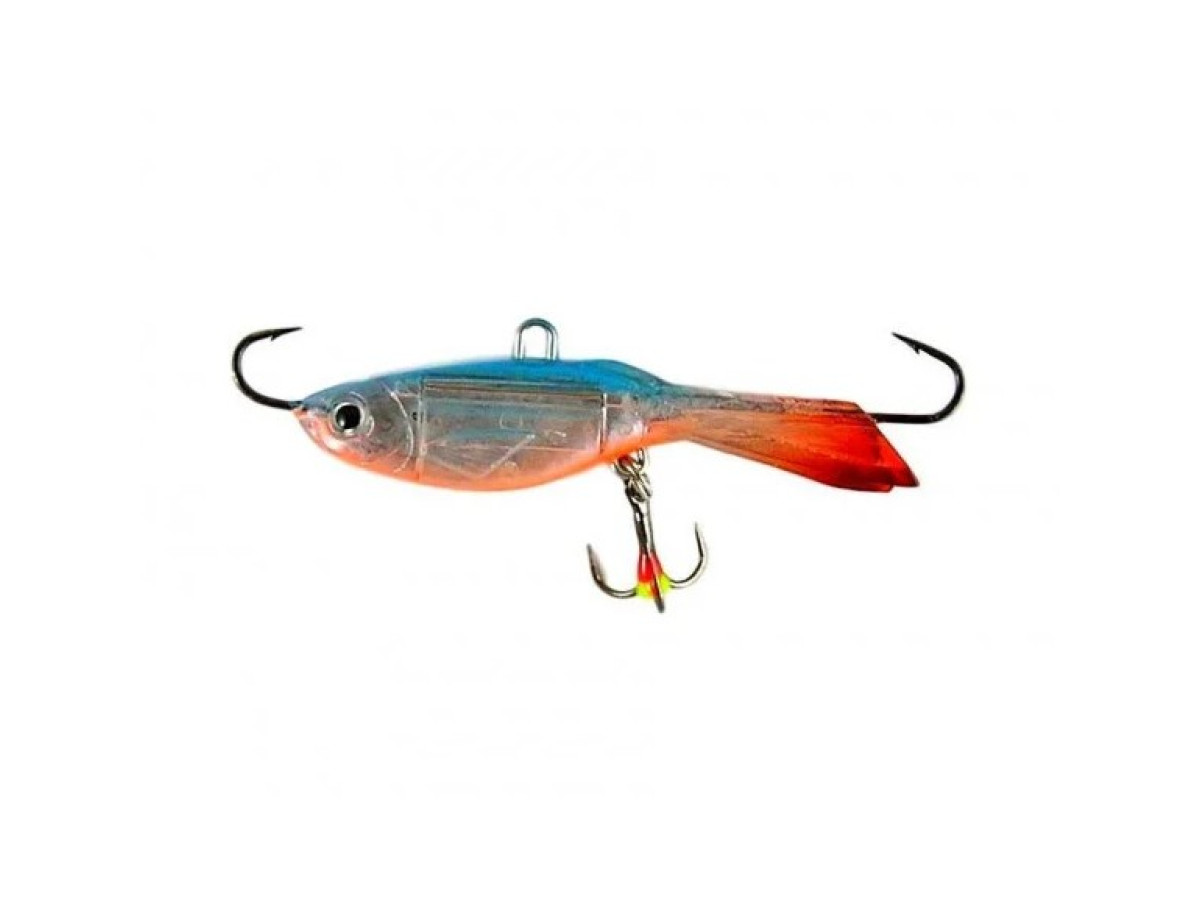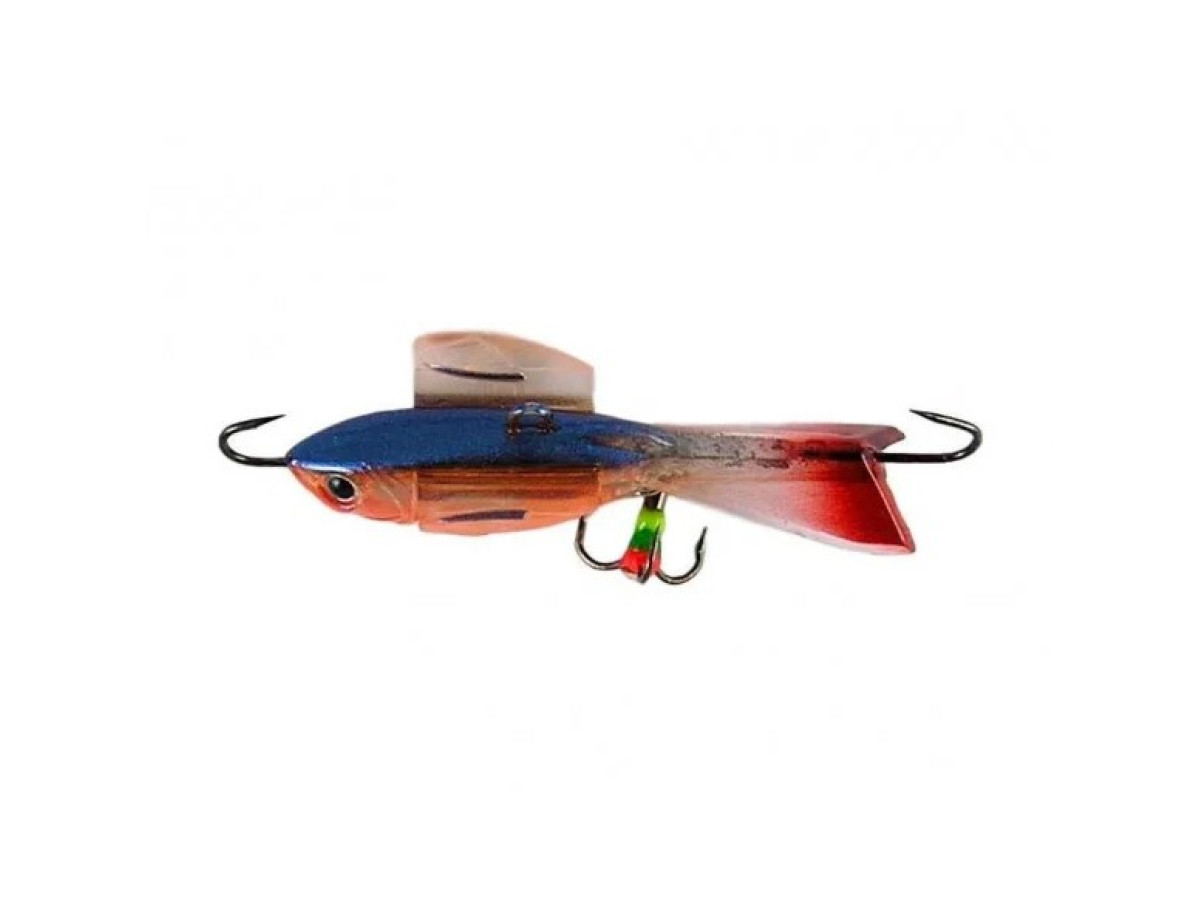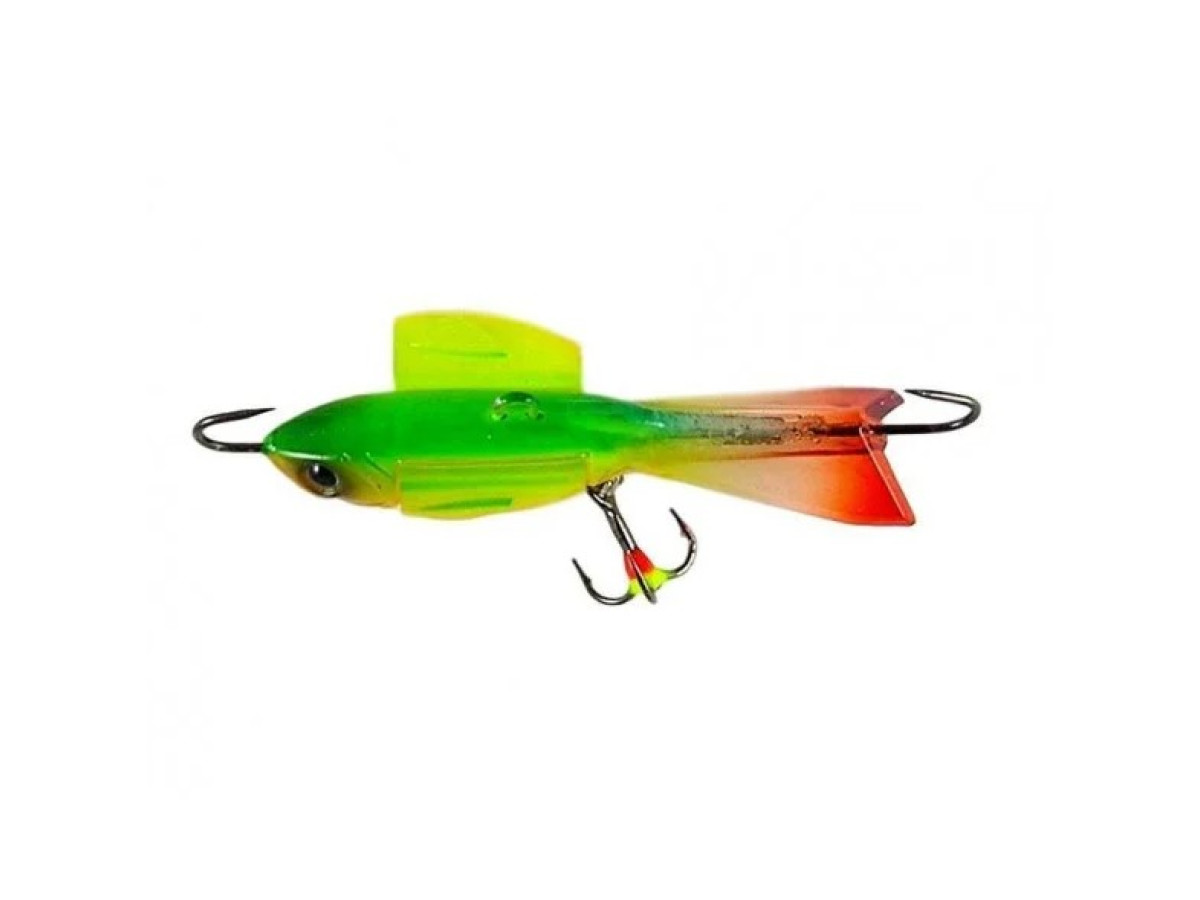
Why a balancer? How is it different from other winter spinners and why has it become so popular recently?
I will try to give my answer to these and other questions related to this catchy artificial bait.
When fishing vertically in winter with oscillating spoons, it was noticed that catchability increases if the bait does not move up and down, but when it begins to glide to the side. And the further the horizontal movement occurs at low speed, the more often it is attacked by predatory fish.
But for this it was necessary to make wide and light spoons, which were inconvenient to use in currents and great depths.
The design and shape of the balancer is such that its movement in the water occurs horizontally with a slight inclination. The best balancer is considered to be the one that, when jerking, goes as far as possible to the side, and then returns almost horizontally.
The advantage of the balancer is that these movements, attractive to fish, occur with a small size but sufficient weight of the bait. This is especially true when fishing for small perch and other small predatory fish at great depths.
The rod is usually used short. If with a coil, then with rings of sufficient diameter so that they do not freeze. It is advisable to attach a nod to the tip so that you can see even a weak bite. And the main thing is to see how the bait works. Although many fishermen rely on line tension.
Personally, I use a guard made of a thin stainless steel cable with a high-quality ring that does not spoil the soft braid.
The tip of the rod should be sufficiently elastic and not become brittle even in severe frost.
The rod must have enough line because you have to fish at different depths.
Recently, more and more fishermen have begun to use small spinning reels. Although some people like simpler and lighter inertial ones. Or they even wind the fishing line onto the reel on the fishing rod.
Which option to choose depends on the fishing conditions, weather and fishing habits. For example, if it’s cold and the guides on your rod quickly become covered with ice, using a spinning coil becomes problematic, even when using a defroster. In this case, the fishing line has to be pulled out by hand. This is especially inconvenient when there is great depth and large fish.
Here we are faced with a dilemma, what to use? Monofilament line or braid?
The cord is thinner and has no stretch, which is, of course, good for quick hooking. Monofilament line is smoother and less noticeable, especially fluorocarbon, but has a lower breaking load. It’s probably best to have both in your arsenal. Depending on the conditions, apply what is convenient on that day.
When fishing with balance beams, it is useful to use a small metal clasp, which makes it easier to change the bait when searching for the right color and size. The main thing is that the fastener is not large, but reliable.
And when catching toothy pikes, you need to use a metal leash. Only it should be as thin as possible so as not to interfere with the play of the bait.
Recently, some anglers have been using fluorocarbon leashes when fishing for pike. Choose a leash of sufficient thickness. In any case, every time you catch another pike, the leash must be checked and replaced if necessary. It is not as strong and durable as metal and quickly becomes unusable from the sharp teeth of spotted predators.
Speaking about the balancers themselves, I would like to draw your attention to the coloring and size.
There are many different opinions on this matter in different sources. Personally, I start catching predators with a perch-colored balancer. Perch is a food competitor for all types of predatory fish, and if they can, they try to get rid of it first.
It has also been noted that in cold water, especially in poor lighting, the blue color is catchable. Bright colors - orange, red, and fluorescent colors - have also proven themselves well. You need to understand that if there is snow on the ice and the weather is cloudy, then the lighting is minimal and the color of the bait is no longer so important.
It is more important in these conditions how the balance beam moves, because in poor lighting and visibility, predators are well oriented using the lateral line. Decisive in this case is the correct animation of the artificial bait. The way you toss it with the tip of the rod, what pauses you make, whether your bait will make circles, figure eights or simply plan is what leads to result. All this comes with experience.
For beginners, I can advise you to practice at home in the bathroom. It’s just better to do this when no one is home. Because some of the household members begin to twist their fingers at their temples when they see you entering the bathroom with a fishing rod. Others lick their lips with hope, thinking, what if it works out even here, I really want fish J
The main thing is that once you understand how to get the movements you need from the balancer, you will quickly get results on the pond.
Don't be lazy, experiment and the result will come. Happy fishing, friends!